Beyond the Bet The Data Ecosystem of Modern Online Casinos

While discussions about platforms like https://ku88.network/ often center on game variety or bonuses, a more profound, data-driven reality underpins their operation. In 2024, the most sophisticated online casinos are less gambling halls and more complex data analytics hubs, using real-time information to shape every user interaction. This unseen digital architecture, focused on personalization and risk, represents the true frontier of online entertainment.

The Algorithmic Croupier: Personalization in Play

Modern platforms employ advanced machine learning to function as an “algorithmic croupier.” A 2024 industry report revealed that top-tier sites process over 15,000 data points per user per hour, from game speed to mouse hover patterns. This isn’t merely for security; it’s to curate a hyper-personalized experience. The slots lobby a player sees, the order of live dealer tables, even the timing of a bonus offer are all dynamic outputs of predictive models designed to maximize engagement.

  • Dynamic Interface Adjustment: Game themes and promotional banners shift based on inferred player preferences.
  • Predictive Bonusing: Offers are triggered not by calendar schedules, but by behavioral cues indicating potential churn.
  • Session Flow Optimization: The platform gently guides users from high-volatility to low-volatility games based on spending patterns.

Case Studies in Data-Driven Engagement

Consider the case of “Player A,” a mid-stakes slots enthusiast. After analyzing his session data, the platform’s system noted his play frequency dropped following losses. An algorithm triggered a “free spins” reward not after a loss, but *before* his predicted next login in 2024, successfully re-engaging him. Conversely, “Player B,” a blackjack strategist, was automatically shown a higher proportion of live dealer tables with classic rules and lower table limits, aligning with her data profile as a calculated, bankroll-conscious player.

A more complex case involved “Player C,” whose transaction patterns subtly mirrored known markers of problematic play. Here, the data ecosystem served a safer gambling function. Instead of punitive limits, the system dynamically inserted longer loading screens and populated his lobby with “break reminder” messages, effectively using behavioral design to nudge towards healthier habits—a dual-use technology highlighting the industry’s ethical tightrope.

The Dual Edge of the Digital Architecture

This infrastructure presents a distinctive duality. On one edge, it creates a seamless, captivating experience where the platform feels intuitively responsive. On the other, it represents an unprecedented level of commercial insight into user behavior. The ethical application of this power is the critical, seldom-discussed battleground. It raises questions about where personalized service ends and manipulative design begins, and how transparency can exist within a proprietary algorithmic black box. For the informed user, understanding that their interaction is with a sophisticated data engine, not just a game, is the first step towards more conscious engagement in this new era of digital entertainment.
How to Invest in the S&P 500: A Beginner’s Guide That Aligns Strategy With Futures Trading Hours

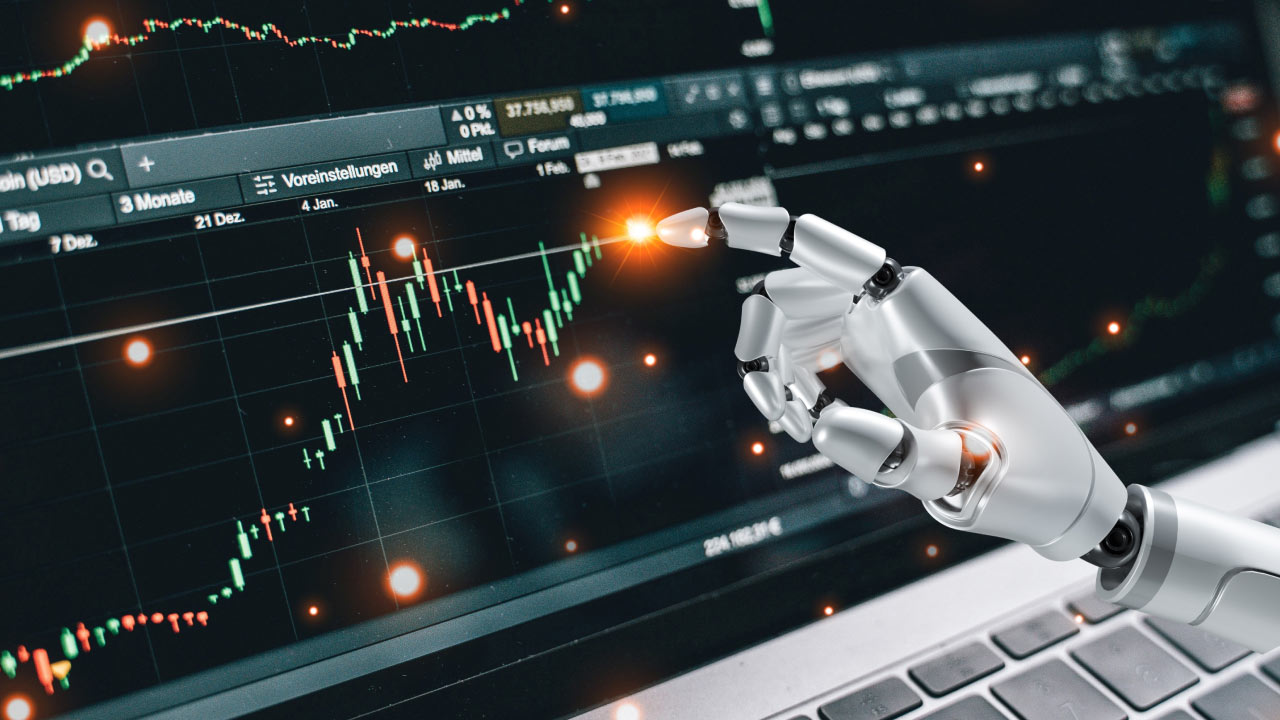
Benefits and Risks of Using AI in Trading: A robotic hand interacting with a forex trading chart on a computer screen, symbolizing AI-driven trading strategies.

A novice investor would usually first try the U.S. stock market by investing in the S&P 500. This is an index made up of 500 largest companies that are publicly traded in the U.S. and recognized as a general market performance indicator among most people. As soon as beginners get to know the factors like market timing, futures trading hours, etc. which exert influence on price movement, liquidity, and the trade execution strategies, understanding how to invest in S&P 500 turns out to be the more powerful tool in their hands.


Demystifying the S&P 500

Rather than a single stock, the S&P 500, is an index that tracks the combined performance of 500 large-cap U.S. companies coming from various sectors like technology, healthcare, and finance. When you learn how to invest in S&P 500, you're practically investing in the entire U.S. economy instead of putting your bets on the fortune of one company. Consequently, the risk exposure is lessened, and long-term returns are made smooth, so this factor is a major attraction for new investors.


Investing in the S&P 500 for First-timers

The most common and straightforward method of investing for most novices is to put their money in S&P 500 index funds or exchange-traded funds (ETFs). Such funds are meant to replicate the performance of the index and are available for purchase via online brokerages as well. Alternatively, there are futures contracts correlated with the S&P 500 that are described as more sophisticated still, they give valuable hints concerning the market's direction and mood. It can be said that while futures may not be appropriate for novices most of the time, becoming familiar with them does help investors to a better understanding of the market behavior and volatility.


The Role of Futures Trading Hours in Market Movement

Inexperienced traders often miss out on one vital thing when it comes to futures trading, and that thing is futures trading hours. The S&P 500 futures market has been open virtually non-stop from Sunday night to Friday night with just a few short interruptions each day. Such a setup allows traders worldwide to react in a similar manner to economic news, earnings, and even political issues, notwithstanding the stock market being closed. Furthermore, this trading sometimes prefigures how the S&P 500 will be during normal trading hours.


The Importance of Futures Trading Hours in the Education of Newbies

The futures trading hours still play a very significant role in price movements and intraday trends even though the trading is not done directly through futures. For example, a major news release during the night can cause either side of S&P 500 futures to move suddenly. When the equity market opens, the ETFs and index funds that are tied to the S&P 500 usually very quickly adjust their positions to match the futures market. Being aware of this relationship will enable a novice trader not to be carried away by the irrationality of the market's emotional phases and to comprehend that price changes frequently have their roots in the futures market, thus they are actually reasonable.


The Synchronization of Long-Term Investment with Market Timing

The exaggerated belief that one must get the timing of the market absolutely right for success is a major fallacy that novices along the path to investing in S&P 500 hold. In fact, long-term investment techniques like dollar-cost averaging not only succeed but also beat short-term speculation most of the time. Nonetheless, getting the grasp of futures trading hours can still be beneficial. Futures market patterns are observed and investors thus get a glimpse of the mood over the market that can lead to the identification of quieter entry points and the avoidance of investment during times of significant volatility.


Using Futures as a Market Indicator

The futures linked to the S&P 500 index serve as a global real-time barometer of investor's risk and opportunity perception. Therefore, if the futures are going up during the night, it is usually an indication of investors’ optimism, while huge drops talk about caution or fear. Newbies who know this cause-and-effect relationship get a better understanding of the market opening with a higher price or lower one. Knowledge here plays the role of building up trust and enforcing disciplined investing over doubt and thus unplanned buying or selling.

Risk Management for New Investors

Risk management is the first step to getting familiar with the S&P 500 investing. Although the index has given strong long-term returns, short-term volatility is still the case. Futures trading can sometimes increase these price changes because of the high leverage used and the global participation during the futures extended trading hours. Therefore, rather than selling or buying stocks every time the futures change, beginners should be thinking about putting money in consistently, having diversified portfolios, and adopting a long-term investment attitude.

Building a Strategy That Fits Your Schedule

Moreover, a great thing an investor can obtain from an understanding of futures trading hours is the flexibility that comes with it. An investor who has a full-time job may not be able to watch the market during regular hours but at least he/she will be able to keep himself/herself informed through futures data outside the regular trading session. This will lead to calmly and strategically planning beginner's investments rather than rushing or being uninformed.


Final Thoughts on Investing in the S&P 500

The first step for a novice willing to make long-term wealth creation through investment is learning how to invest in S&P 500. Investors through the measure of taking a simple index based approach combined with an understanding of futures trading hours get to know the market behavior, the global sentiment, and the price movements in a more profound way. Futures trading itself may not be the right thing for every beginner; however, the ability to see its influence leads to the making of more intelligent decisions, the holding of stronger discipline, and the taking of a more confident investing journey which is in line with the real market dynamics.